


Neuroplasticity: How to Rewire Your Brain for Success
Using your brain's adaptability to create new success patterns

Until relatively recently, scientists believed that the adult brain was essentially fixed – that after a certain age, the neural pathways established in your brain were set for life. This pessimistic view suggested that significant personal change became increasingly difficult, if not impossible, as we aged.
Fortunately, decades of neuroscience research have completely revolutionised our understanding of the brain. We now know that your brain remains remarkably adaptable throughout your entire life through a process called neuroplasticity—the brain's ability to reorganise itself by forming new neural connections and weakening unused ones.
This discovery isn't just fascinating neuroscience – it offers profound implications for anyone seeking personal or professional growth. Understanding how to intentionally harness your brain's natural plasticity provides a science-based approach to creating lasting positive change.
Neuroplasticity Fundamentals: How Your Brain Changes
At its core, neuroplasticity refers to the brain's ability to change its physical structure and functional organisation in response to experience. Several key mechanisms drive this remarkable adaptability:
Synaptic Plasticity
The connections between neurons, called synapses, strengthen or weaken based on how frequently they're activated. The more you practice a particular thought pattern or behaviour, the stronger those neural connections become – a process often summarised as "neurons that fire together, wire together."
Dendritic Branching
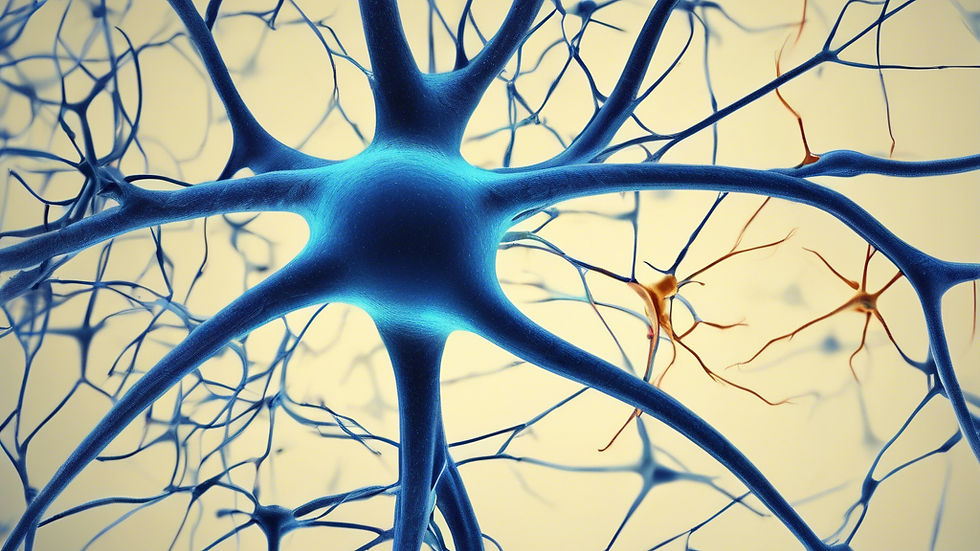
Neurons can grow new branches (dendrites) to form connections with other neurons, creating new pathways for information flow. This process allows for the creation of entirely new neural networks as you learn and grow.
Neurogenesis
Contrary to previous beliefs, research has shown that the adult brain can generate new neurons, particularly in the hippocampus – a region crucial for learning and memory. While more limited than other plasticity mechanisms, neurogenesis provides additional adaptive capacity.
Myelin Optimisation
Frequently used neural pathways develop thicker myelin sheaths – insulating layers that dramatically increase transmission speed and efficiency. This process makes well-practised patterns increasingly automatic and efficient.
These mechanisms create the biological foundation for lifelong learning, adaptation, and personal transformation. Every time you practice a new skill, thought pattern, or behaviour, you're literally reshaping your brain's physical structure.
The Four Mechanisms of Brain Change
To effectively apply neuroplasticity principles to your own development, focus on these four primary drivers of brain change:
1. Focused Attention
Your brain allocates resources to whatever you focus on consistently. Directed attention is like a spotlight that signals to your brain, "this is important – allocate resources here." Without focused attention, significant neural reorganisation rarely occurs.
This explains why passive exposure to information rarely creates lasting change. Reading about a new approach without concentrated practice generally creates minimal neural adaptation. Conversely, deliberate focus combined with practice creates substantial rewiring.
2. Challenge and Novelty
Your brain adapts most readily when exposed to the right level of challenge—activities that push slightly beyond your current capabilities. This optimal challenge zone triggers BDNF (brain-derived neurotrophic factor), often called "fertiliser for the brain," which supports new neural connections.
Similarly, novel experiences stimulate neuroplasticity by activating the brain's learning mechanisms. Routinely exposing yourself to new situations, information, and challenges keeps your brain adaptable and promotes continuing growth.
3. Repetition and Practice
While focused attention and challenge initiate brain change, repetition strengthens and solidifies new neural pathways. Consistent practice transforms fragile new connections into strong, efficient pathways that eventually become your brain's preferred routes – the path of least resistance.
This principle explains why lasting change requires persistent effort rather than occasional intense experiences. A three-day workshop might initiate new neural connections, but without follow-up practice, these connections typically weaken and disappear within weeks.
4. Emotional Significance
Your brain prioritises experiences with emotional significance, allocating additional resources to encoding emotionally relevant information. The brain's emotional centres have direct connections to areas involved in memory formation and learning.
This is why emotionally engaging learning experiences create stronger neural change than emotionally neutral ones. Connecting desired changes to meaningful values and emotionally significant goals accelerates neuroplasticity.
Self-Directed Neuroplasticity Techniques
You can deliberately harness these neuroplasticity principles through specific practices:
Pattern Interruption
To change established neural patterns, you must first interrupt their automatic activation:
Mindful awareness: Notice when unwanted patterns activate.
Pattern break signals: Create specific interruption cues.
State changes: Use physical movement or breathing to disrupt patterns.
Environmental modifications: Alter triggers that activate unwanted circuits.
Deliberate Practice
Create structured, focused practice to strengthen desired neural pathways:
Micro-practice: Brief, high-frequency practice sessions.
Progressive challenge: Gradually increasing difficulty levels.
Immediate feedback: Prompt information about effectiveness.
Visualisation: Mental rehearsal that activates relevant neural circuits.
Environmental Design
Structure your environment to support desired neural patterns:
Cue enrichment: Surround yourself with reminders of target patterns.
Friction reduction: Make desired behaviours require less activation energy.
Trigger management: Minimise exposure to stimuli that activate unwanted circuits.
Support immersion: Engage with communities practising desired patterns.
State Management
Cultivate brain states that optimise neuroplasticity:
Stress regulation: Maintain optimal arousal for learning.
Sleep optimisation: Support crucial overnight consolidation processes.
Movement integration: Use physical activity to enhance brain adaptation.
Nutrition support: Provide necessary building blocks for neural development.
Creating New Success Pathways: A Practical Example
Clive, a technology professional with a 15-year pattern of procrastination and last-minute work completion, applied these neuroplasticity principles to rewire this deeply established pattern:
First, he implemented pattern interruption by creating an awareness trigger – a small dot on his computer that reminded him to notice when he was about to defer important work. This mindful interruption prevented the automatic activation of his procrastination circuit.
Next, he established deliberate practice of task initiation, starting with just 5 minutes of focused work on important projects early in their timeline. This micro-practice approach made the new pattern achievable while still creating meaningful neural activation.
He redesigned his environment by creating a dedicated "early work" space free from distractions and established an implementation intention: "When I receive a new project, I will immediately schedule and protect three 30-minute early work sessions."
Within three months, Clive had established a new neural pattern of early task initiation that began to feel more natural than his previous procrastination habit. The key was consistent application of neuroplasticity principles rather than relying on willpower alone.
Your brain is designed to change.
Remember neuroplasticity success: With the right approach, you can literally rewire your brain for success at any age. Your neural pathways aren't your destiny – they're simply the current path of least resistance, and they can be changed with deliberate practice.


Comments